Brazil
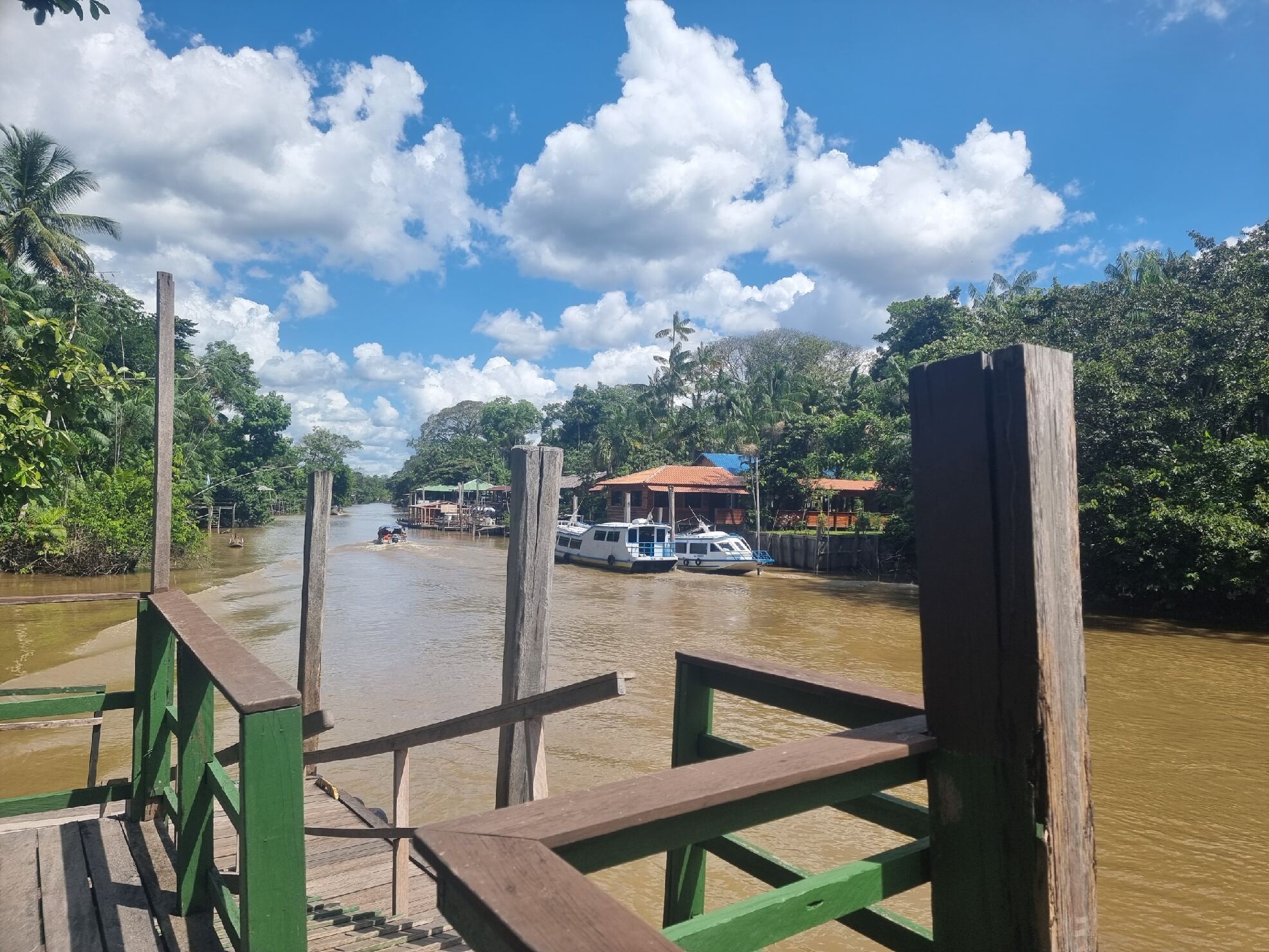
Ilha do Combu, Brazil
Our work in Brazil
It is believed that Brazilian governments remain wedded to the exploitation of the Amazon rainforest despite the ecological and climatic impact of large-scale logging and conversion of forest to agricultural land. Mitigation policies such as the creation of conservation sites and attempts to use already deforested areas as sites of monoculture farming and animal rearing have sometimes fallen short of their goals. In response, various social groups are forming enterprises and employ smart /or appropriate technologies in pursuit of a ‘post-extractivist’ business model, claiming decoupling by enabling a combination of commercial and sustainable bioeconomic use of the Amazon. The study engages with this Brazilian ‘scaling’ of different technological revolutions for the use of the Brazilian Amazon. Key questions include: how digital technologies and infrastructures directly and indirectly impact upon ‘the value’ – economic or climatic – of the rainforest; how it can come to fruition in the conjunction of interests of rural settlers, indigenous groups, international capital, governments and the agro-IT sector; and which kinds of technological, environmental and entrepreneurial agencies are at play in this attempt of decoupling.
Researchers Working on this Subproject
Priscilla Santos da Costa
Steffen Dalsgaard
Activities related to the Brazil subproject
-
Advisory board visits: Inspiring encounters
Chunrong Liu spring visit March 23-26, 2026 On the 23rd of March, Professor of Political Science at Fudan University Chunrong Liu visited the Decoupling IT research group as a part […]
-
A Forest (and a COP) for Whom?: An op-ed on COP30, colonial legacies, controversies of the green transition, and the importance of listening to indigenous Amazonians
Written by Priscila Santos da Costa, Steffen Dalsgaard and Fabio Zuker For whom is Amazonia being protected? This is the question that Belém, a port city at the mouth […]
-
Dams and Decoupling: the costs of “carbon neutral” energy in Brazil
Written by Steffen Dalsgaard The majority of Brazil’s electricity is generated by hydropower. Taking a look at data sources such as Electricity Maps tells us on a given day in […]